This article is for contractors, site engineers, project managers, developers, and municipalities working in Iowa and elsewhere in the U.S. You'll learn what concrete washout is, what federal and state law requires, which containment systems are available, and the specific practices that keep a site compliant when an inspector shows up.
Key Takeaways
- Concrete washout must be contained in a leak-proof system before the first pour begins
- The EPA's 2022 Construction General Permit (CGP) sets the federal floor — Iowa's GP2 (March 2023–February 2028) adds a strict no-discharge rule on top of that
- Containment options range from portable polypropylene bags to lined earthen pits — project scale and soil conditions drive the choice
- Inspections are required every 7 days and within 24 hours of a 0.25-inch rain event
- Every inspection finding must be logged in your SWPPP
What Is Concrete Washout and Why Does It Matter?
Concrete washout is the slurry of water, cement particles, and chemical admixtures left behind when crews rinse out ready-mix truck chutes, pump hoppers, and hand tools after a pour. The same rules apply to mortar, stucco, grout, and other cementitious materials — if it's cementitious and you're rinsing it off equipment, it needs to be contained.
Environmental Risk in Plain Terms
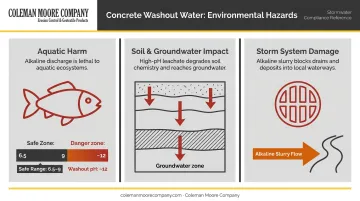
According to EPA stormwater guidance, concrete washout water is caustic, corrosive, and contains toxic metals including chromium. The environmental damage it causes is well-documented:
- Aquatic harm: The EPA notes that caustic washwater can damage fish gills and eyes and interfere with reproduction; safe pH for freshwater aquatic life is 6.5–9, far below washout water's pH of 12
- Soil and groundwater impact: Dumped washwater alters soil chemistry, inhibits plant growth, and can percolate into groundwater
- Storm system damage: Washout running into storm drains carries that alkaline slurry directly toward waterways
Every site that uses cementitious materials generates washout requiring containment — from a residential foundation to a highway bridge pour.
Regulatory Requirements: EPA CGP, NPDES, and SWPPP
The Federal Framework
The EPA's National Pollutant Discharge Elimination System (NPDES) program governs stormwater discharges from construction sites disturbing one or more acres. The 2022 Construction General Permit (CGP) is the operative federal document, and its language on concrete washout is explicit.
Core CGP 2022 requirements for concrete washout:
- All washout water and solids must go into a leak-proof container or leak-proof and lined pit sized to prevent overflows
- Liquid waste must not be dumped on the ground, into drainage channels, storm inlets, or receiving waters — and cannot be disposed of through infiltration
- Washout activities should be located as far as possible from receiving waters, drainage features, and storm drain inlets; the EPA BMP guidance uses 50 feet as the benchmark from storm drains, open ditches, and water bodies
- Sites discharging to impaired or sensitive waters must inspect every 7 calendar days and within 24 hours of a storm producing 0.25 inches or more of rain
SWPPP Requirements
Any site covered by an NPDES permit must maintain a current Stormwater Pollution Prevention Plan (SWPPP) on-site. The SWPPP must document:
- The washout BMP type, location, and capacity
- The responsible party for inspections
- Maintenance schedules and inspection history
- Training verification for the stormwater team
An outdated or missing SWPPP is one of the most consistent triggers for violations during inspections. Inspectors look for documentation gaps first — a SWPPP that predates current site conditions or omits the washout BMP location will draw a notice of violation before anyone looks at your containment setup.
Iowa-Specific Requirements
Iowa administers its own NPDES program under delegated authority. The Iowa DNR's General Permit No. 2 (GP2), effective March 1, 2023 through February 29, 2028, is clear: discharges from concrete washout and wet-sawing operations are not authorized. Waste cannot discharge to surface waters or adversely affect waters of the state.
Those baseline prohibitions apply to all containment types. For unlined earthen pits specifically, the setback requirements are stricter — stormwater manuals from multiple jurisdictions require:
- No unlined pit within 100 feet of storm drains, open ditches, water bodies, springs, or wetlands
- No unlined pit within 1,000 feet of wells or drinking-water sources
- Liner required where high groundwater exists or soils are sandy or silty — conditions common in many Iowa construction corridors
These setbacks reflect Iowa's soil variability — sandy and silty conditions throughout many construction corridors make unlined pits a groundwater risk. Verify current requirements with the Iowa DNR before project start, and check local county or municipal stormwater ordinances, which may be stricter than the GP2 baseline.
Types of Concrete Washout Containment Systems
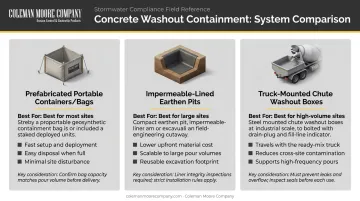
Three main categories serve most construction scenarios:
| System Type | Best For | Key Consideration |
|---|---|---|
| Prefabricated portable containers / bags | Most sites; inspector-preferred | Fast setup, easy to inspect, straightforward disposal |
| Impermeable-lined earthen or constructed pits | Large sites with space; lower upfront cost | Subject to strict siting and liner requirements |
| Truck-mounted chute washout boxes | High-volume sites with multiple deliveries | Still must prevent leaks, overflows, and discharge |
Portable Containers and Bags
Iowa NPDES stormwater guidance notes that prefabricated containers are generally preferred by inspectors because they resist damage and help prevent spills and leaks. For most Iowa construction projects, a portable polypropylene washout bag is a reliable, fast-setup compliance option.
Coleman Moore Company supplies polypropylene concrete washout bags in two sizes — 0.87 cubic yards and 1.62 cubic yards — suited to projects ranging from smaller foundation pours to larger commercial or infrastructure work. The bags can be transported to a landfill when full, or the concrete can be filtered out and taken to a recycling facility.
Lined Pit Systems
When a lined pit is the right fit for your site, liner material matters. Regulatory guidance and state BMP documents specify minimum liner requirements that must be met before the pit is put into service.
Key liner specifications include:
- Minimum 10-mil polyethylene sheeting, free of holes, tears, or defects
- Liner must resist puncture from equipment operating near the pit
- No seams, patches, or repairs that compromise impermeability
Coleman Moore supplies geosynthetic liner materials from manufacturers including Solmax and helps contractors identify the right solution for their site conditions. Contact the Des Moines team directly at 515-309-5577 for product recommendations specific to your project.
Best Practices for a Compliant Concrete Washout System
Siting and Setup
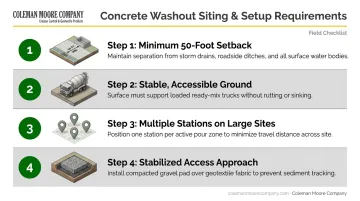
Set up containment before the first pour — this is a CGP requirement, not a suggestion. When siting your washout area:
- Position it at least 50 feet (or the applicable state/local distance) from storm drains, ditches, and water bodies
- Choose stable, accessible ground that ready-mix trucks can reach without creating new drainage problems
- On large sites with multiple pour locations, place stations at each pour zone rather than routing drivers across the site
- Stabilize the access approach with gravel or aggregate — EPA BMP guidance specifically calls this out for unpaved washout areas. Sediment logs and geotextiles are well-suited for stabilizing the perimeter around washout stations
Post clear, legible signage at the container and at all mixer staging areas. If the washout facility isn't visible from the pour location, Dane County stormwater guidance requires signage — apply that standard on any job site, regardless of jurisdiction.
Inspection, Maintenance, and Disposal
Inspection routine:
- Check fill level — pump out or allow evaporation when the container reaches 75% capacity, not when it's full
- Inspect liner or container walls for damage, tears, or signs of leakage
- Document every inspection in the SWPPP log: date, inspector name, fill level, any damage found, and corrective action taken
Don't wait until the container is at capacity to arrange haul-off. Coordinate the disposal schedule with your ready-mix supplier or a licensed waste hauler before you hit the 75% threshold. Once liquid has evaporated or been vacuumed off, the solidified waste goes to an approved recycling or disposal facility.
Crew Training
A pre-pour orientation matters more than most crews realize. Even the most compliant containment setup fails when one driver dumps washout in the wrong spot. Cover these points before work begins:
- Location of the washout station
- Proper rinsing procedure
- Who to contact with questions
Brief every ready-mix driver on arrival — and make it part of your standard check-in process, not an afterthought.
The 2022 CGP requires training verification in the SWPPP — record the date, attendees, and topics covered each time.
Common Violations and the Cost of Non-Compliance
What Inspectors Find
EPA construction inspection training identifies these recurring concrete washout issues on NPDES sites:
- No designated washout container provided before the pour
- Concrete washout deposited directly on the ground
- Washout residue that reached or appeared to enter a storm drain inlet
- Containment sized inadequately for the project, creating overflow risk
- Missing corrective-action documentation in the SWPPP log
Each of these findings translates directly into penalties — and the dollar amounts climb fast.
What Non-Compliance Costs
Under the Clean Water Act (33 U.S.C. 1319(d)), civil penalties can reach $25,000 per day per violation. With inflation adjustments, 40 CFR 19.4 sets current maximums at $68,445 per day for penalties assessed on or after January 8, 2025.
Those numbers aren't theoretical. In EPA's Home Builders Clean Water Settlement, alleged violations including failure to install concrete washout basins resulted in $4.3 million in civil penalties, plus company-wide compliance programs, trained staff at every construction site, and pre-construction and quarterly oversight inspections.
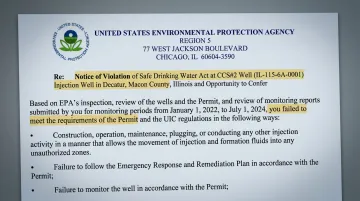
Even a first-time minor infraction carries immediate costs. Boise, Idaho documents that uncontained washout can trigger a $78.75 special investigation fee, a $55 re-inspection fee, and a parcel hold until the situation is corrected — all before any CWA penalty enters the picture. Stack on legal review time, project delays, and lost standing with municipal and DOT clients, and the total exposure from a single oversight becomes significant.
The next section covers exactly what compliant setup looks like — container sizing, siting requirements, and the documentation that keeps inspectors satisfied.
Frequently Asked Questions
What is a concrete washout container?
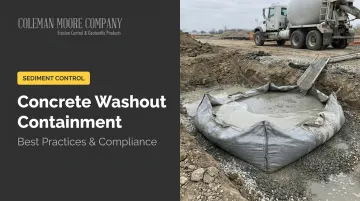
A concrete washout container is a leak-proof vessel (portable bin, flexible polypropylene bag, or lined pit) used to capture the slurry and rinse water generated when washing out concrete trucks, chutes, and equipment after a pour. It prevents that highly alkaline waste from reaching soil, groundwater, or storm drains.
Do I need a concrete washout system?
Yes — any site disturbing one or more acres that involves concrete, mortar, or other cementitious materials must have a compliant washout system in place before concrete work begins under the EPA's NPDES Construction General Permit. Iowa's GP2 applies the same no-discharge requirement across covered sites.
What are the penalties for improper concrete washout?
Civil penalties under the Clean Water Act can reach $68,445 per day per violation under current inflation-adjusted figures. First offenses typically result in a Notice of Violation with re-inspection fees and project delays; repeat or willful violations can escalate to criminal liability.
How far should a concrete washout area be from storm drains or waterways?
The EPA BMP guidance uses 50 feet as the benchmark from storm drains, open ditches, and water bodies. Some state permits and county stormwater manuals require up to 100 feet from sensitive resources and 1,000 feet from wells. Confirm the applicable local requirement before siting your containment.
How often does a concrete washout container need to be inspected?
Under CGP 2022, sites discharging to impaired or sensitive waters must inspect every 7 calendar days and within 24 hours of any rain event of 0.25 inches or more. Other covered sites may use a 14-day interval plus that same 24-hour post-rain window — all inspections must be logged in the SWPPP.
When should a washout container be emptied or replaced?
Pump out liquid or allow it to evaporate once the container reaches 75% capacity (an EPA BMP threshold echoed by Iowa's local stormwater programs). Arrange haul-off of solidified waste to an approved facility before the container is full.