
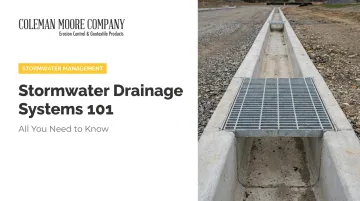
It's a situation contractors, engineers, and municipalities across Iowa deal with regularly. As impervious surfaces — roads, parking lots, rooftops — continue to replace permeable land, natural water absorption is disrupted, and engineered drainage systems become essential for protecting infrastructure, public safety, and water quality.
Iowa averages 32.6 inches of precipitation annually, according to NOAA's 2022 Iowa State Climate Summary, with seasonal freeze-thaw cycles adding additional stress on drainage infrastructure. The June 2008 floods across the central U.S. demonstrated how quickly inadequate stormwater capacity becomes a regional crisis — that event caused over $5 billion in damages and put 143 river forecast locations into major flood stage.
This guide covers what stormwater drainage systems are, how they work, the main types, key components, regulatory requirements, and maintenance best practices.
Key Takeaways
- Developed sites can generate 5x more runoff than natural land cover, requiring systems sized for volume, not just conveyance
- Stormwater drains directly to waterways — untreated — making source-level contamination control critical
- Any construction activity disturbing 1 acre or more in Iowa triggers an NPDES permit and SWPPP requirement
- LID approaches like bioswales and permeable pavement can cut infrastructure costs by 15–80%, with the greatest savings on sites with suitable soils and low slopes
- Regular inspection of outfalls, inlets, and sediment basins catches the failures — clogging, erosion, and bypass flow — before they escalate
What Is Stormwater and Why Does It Need to Be Managed?
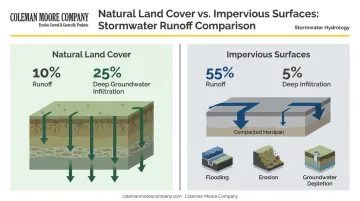
Stormwater is precipitation — rain, snowmelt — that flows across the land surface rather than being absorbed into the ground. Under natural conditions, roughly 10% of rainfall becomes runoff.
Replace that land with impervious surfaces and runoff climbs to 55%, while deep groundwater infiltration drops from 25% to just 5%, according to USGS data on impervious surfaces and flooding.
That shift creates three compounding problems:
- Flooding — higher runoff volume overwhelms drainage capacity and damages property
- Erosion — increased velocity scours stream banks and destabilizes soils downstream
- Groundwater depletion — less water percolates to recharge aquifers
Those physical impacts are only part of the story. Runoff also carries a serious contamination threat.
The Water Quality Problem
Stormwater doesn't just move water — it moves everything that's sitting on pavement. Oils, heavy metals, pesticides, fertilizers, and sediment all get swept up and carried toward the nearest waterway. Research on urban roadway runoff shows the first 30% of runoff transports 34–43% of total pollutant mass — meaning that initial surge at the start of a storm carries an outsized share of total pollution.
Unlike household sewage, stormwater is typically discharged untreated directly into rivers, streams, and lakes. The EPA describes municipal separate storm sewer systems (MS4s) as routinely discharging polluted runoff without treatment. That's why preventing contamination at the source matters more than trying to treat it after the fact.
Storm drains and sanitary sewers are completely separate systems. Sanitary sewers carry wastewater to treatment plants. Storm drains carry surface runoff straight to natural waterways. Cross-connections between the two are serious regulatory violations with costly fines and environmental liability.
Key Components of a Stormwater Drainage System
The Iowa DOT defines stormwater drainage systems as collecting minor design storm runoff and conveying major storm flood flows to a discharge point. In practice, that means a connected set of physical components working in sequence.
Inlets and Catch Basins
Inlets — grated openings, curb cuts, or channel drains — are where surface water enters the system. Catch basins sit just below, functioning as a first-stage trap for debris and sediment before water enters the pipe network. Regular cleaning keeps these entry points functional; a clogged inlet during a major storm event is often where flooding starts.
Pipe Network
Underground pipes carry collected runoff to its destination. Iowa SUDAS-approved materials include reinforced concrete pipe, PVC, corrugated PVC, polypropylene, and HDPE. HDPE weighs approximately 20 times less than concrete pipe of the same diameter, which affects handling and installation logistics on larger projects.
Pipe design isn't arbitrary — slope, diameter, and capacity are calculated hydraulically to maintain adequate flow velocity. Too slow and sediment settles in the pipe; too fast and scour damage becomes a problem at outlets.
Detention and Retention Basins
Once runoff leaves the pipe network, detention and retention basins take over — managing peak flow before water reaches downstream waterways. Both basin types serve this purpose, but they work differently:
| Basin Type | How It Works | Primary Benefit |
|---|---|---|
| Detention (dry) | Stores runoff temporarily, releases at controlled rate | Reduces peak flow, protects downstream infrastructure |
| Retention (wet) | Permanently holds water, gradual infiltration or evaporation | Volume reduction, some water quality benefit |
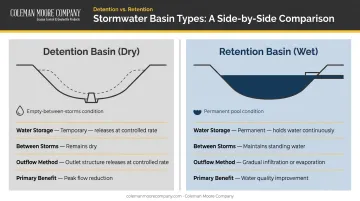
EPA describes dry detention ponds as depressed areas that remain dry between storm events and slow stormwater to reduce peak flow rates. Proper basin design directly reduces downstream flood risk — undersized or poorly maintained basins transfer that risk to adjacent properties and waterways.
Outlet Structures and Geotextiles
Water exits the system through outfall pipes into waterways, basins, or infiltration areas. Headwalls and outlet protection prevent scour at these discharge points, which are among the most common failure locations in aging systems.
Geotextile filter fabrics are embedded throughout — wrapping perforated pipes, lining infiltration trenches, and stabilizing basin embankments. Their function is straightforward: let water pass while preventing soil migration into drainage media. Coleman Moore Company supplies both nonwoven and woven geotextiles for these applications, including pipe wrap, French drains, underdrains, and trench systems across Iowa civil infrastructure projects.
Main Types of Stormwater Drainage Systems
Surface Drainage Systems
Surface drainage is the first line of defense: roadside ditches, swales, grassed channels, and curb-and-gutter networks that collect runoff overland and direct it toward inlets or discharge points.
Grassed swales and bioswales are shallow vegetated channels that do more than just move water. By slowing flow velocity, they allow sediment, metals, and other pollutants to settle or filter out before water reaches the pipe network. EPA describes grassed swales as BMPs that combine conveyance, pretreatment, and infiltration where grades and right-of-way allow.
Subsurface (Underground) Drainage Systems
Piped storm sewer networks are the standard solution for urban and suburban areas. Underground pipes collect runoff from surface inlets and transport it to a discharge point or storage facility.
Infiltration trenches and perforated pipe systems return runoff to the ground rather than conveying it away, supporting groundwater recharge. Geotextile filter fabric is non-negotiable in these applications. Without it, soil fines migrate into the aggregate fill, clog the system, and eliminate infiltration capacity entirely.
Coleman Moore's nonwoven geotextiles are specifically designed for subsurface drainage, pipe wrap, and trench applications where filtration performance matters.
Green Infrastructure and Low-Impact Development (LID)
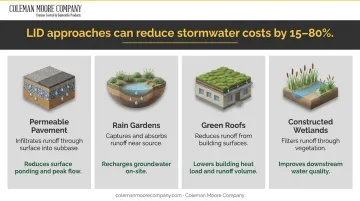
LID approaches manage stormwater at the source rather than collecting and conveying it away. Common applications include:
- Permeable pavement infiltrates runoff through the surface layer directly into the subbase
- Rain gardens use depressed, planted areas to capture and absorb runoff close to the source
- Green roofs reduce runoff volume generated by building surfaces
- Constructed wetlands slow and filter runoff through vegetation and soil before discharge
Cost data from an EPA LID evaluation found 11 of 12 projects cost less than conventional stormwater designs, with savings of 15–80% on suitable sites. LID is increasingly integrated into regulatory frameworks — NPDES Phase II requirements and Iowa DNR MS4 permits both reference post-construction stormwater controls that LID approaches can satisfy.
Coleman Moore supplies geotextiles for permeable pavement underlayment, turf reinforcement mats for bioswale applications, and coir fiber logs for wetland construction and shoreline stabilization.
Environmental Impacts and Water Quality Concerns
The First Flush Effect
The initial surge of runoff at the start of a storm carries the heaviest pollutant load. Oils, heavy metals, and sediment that have accumulated on pavement between rain events get mobilized in that first push of water. The implication for system design: treatment or filtration needs to handle that concentrated early flow, not just average event conditions.
That pollutant load is only part of the problem. Increased urban runoff also physically degrades stream systems — USGS research documents how elevated streamflow from development causes bank erosion that damages fish spawning habitat and reduces living space for invertebrates, effects that compound as development intensity increases.
Construction BMPs for Water Quality
Before a permanent stormwater system is in place, active construction sites are major pollution sources. Best Management Practices deployed during site disturbance include:
- Curlex® biodegradable erosion control blankets (American Excelsior) for slope stabilization and channel protection
- Sediment logs and wattles placed at drainage outlets, ditch bottoms, and site perimeters to capture sediment
- Turbidity curtains that contain sediment migration near water bodies during in-water or adjacent construction
- Inlet protection devices — FlexStorm, EZ-Catch, and Wimco products — to keep sediment out of storm drains during active grading
- Concrete washout bags that prevent slurry from reaching drainage systems
Coleman Moore Company supplies all of these products for Iowa construction sites, along with design assistance to ensure BMP placement meets SWPPP requirements.
Regulatory Requirements for Stormwater Drainage
Federal Framework: Clean Water Act and NPDES
The Clean Water Act's Section 402 authorizes the NPDES program, which requires permits for stormwater discharges. The construction trigger is clear: any land-disturbing activity of 1 acre or more — or less than 1 acre if part of a larger common plan of development — requires permit coverage.
A Construction General Permit (CGP) requires operators to develop and implement a Stormwater Pollution Prevention Plan (SWPPP) detailing specific erosion and sediment control measures. EPA's 2022 CGP also established inspection and turbidity benchmark monitoring requirements for dewatering discharges.
Iowa-Specific Requirements
Iowa DNR mirrors the federal threshold: construction activity disturbing one or more acres triggers Iowa's stormwater permit requirements. Key Iowa-specific requirements include:
- General Permit #2 covers stormwater discharges from construction activities and is currently in effect through February 29, 2028
- MS4 permits are required for Iowa cities and universities above population thresholds, mandating stormwater management programs
- Iowa's Section 303(d) Impaired Waters List identifies water bodies that don't meet quality standards — a direct driver for why BMP compliance matters on individual projects
Practical takeaway: Verify with Iowa DNR whether your project requires a permit before grading begins, not after. Late permit coverage is a compliance violation.
Maintaining Your Stormwater Drainage System
Stormwater systems are infrastructure. Without scheduled attention, they fail. The most common failure points:
- Clogged inlets and catch basins from debris and sediment accumulation
- Sediment buildup in pipes and basins reducing conveyance capacity
- Scour and erosion at outfall structures undermining headwalls and embankments
- Degraded geotextile filter fabrics allowing soil migration into drainage media
Routine Maintenance Priorities
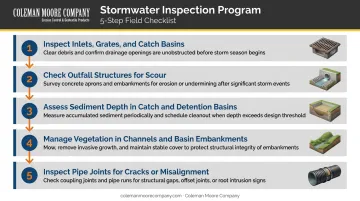
Rather than following a fixed dredging schedule, base sediment removal on actual inspection results and observed capacity loss. A structured inspection program should cover:
- Inspect all inlets, grates, and catch basins before storm season begins
- Check outfall structures for scour damage after significant storm events
- Assess sediment depth in catch basins and detention basins on a periodic basis
- Manage vegetation growth in channels and along basin embankments
- Inspect pipe joints for cracks, infiltration, or offset alignment
Protecting Outfalls and Embankments
Outfall structures take the most physical punishment in a stormwater system. Products suited for this ongoing maintenance work include:
- ScourStop™: NPDES-compliant vegetated alternative to riprap, suited for culvert outlets and channel protection
- Flexamat: Concrete block erosion control mat for high-velocity applications, rated for 30+ fps and basin side slopes
- Kyowa Filter Units (rock bags): Anti-scour protection for outlet aprons and streambank stabilization
- Turf Reinforcement Mats (TRMs): Permanent non-degradable mats for municipal stormwater channels and concentrated flow areas
Coleman Moore provides technical consultation on product selection for specific maintenance applications: outfall protection, basin embankment stabilization, and channel lining. The team has supported Iowa civil infrastructure projects for over 20 years.
Frequently Asked Questions
What is a stormwater drainage system and how does it work?
A stormwater drainage system collects runoff from impervious surfaces through inlets, channels, and pipes, then directs it to a discharge point such as a detention basin, retention basin, or natural waterway. The system prevents flooding, controls peak flow, and protects infrastructure from erosion damage.
What are the mandatory requirements for a stormwater drainage system?
Construction sites disturbing 1 acre or more in Iowa require an NPDES stormwater permit under Iowa General Permit #2 and a Stormwater Pollution Prevention Plan (SWPPP). Local municipalities and Iowa DOT projects carry additional design standards for pipe sizing, detention volume, and water quality treatment.
What are the main types of storm drains?
The three primary categories are: surface drainage systems (swales, grassed channels, curb-and-gutter); subsurface piped systems (storm sewers, perforated pipe with geotextile wrapping); and green infrastructure/LID approaches (bioswales, permeable pavement, rain gardens, retention basins).
What is the difference between a storm drain and a sanitary sewer?
Storm drains carry untreated surface runoff directly to waterways. Sanitary sewers carry household and industrial wastewater to treatment plants. They are entirely separate systems; cross-connections between them are serious regulatory violations with significant environmental consequences.
How do erosion control products support stormwater management?
Erosion control blankets, geotextile filter fabrics, sediment logs, and inlet protection devices prevent soil from entering drainage systems during construction and site disturbance. They maintain system capacity, satisfy SWPPP compliance requirements, and protect receiving waterways from sediment loading.
What happens when a stormwater drainage system fails?
System failure typically causes localized flooding, infrastructure erosion, property damage, and downstream water quality degradation. For permitted sites, it also triggers regulatory penalties for NPDES non-compliance. Routine inspection and proactive maintenance are far less costly than emergency repairs or enforcement actions.